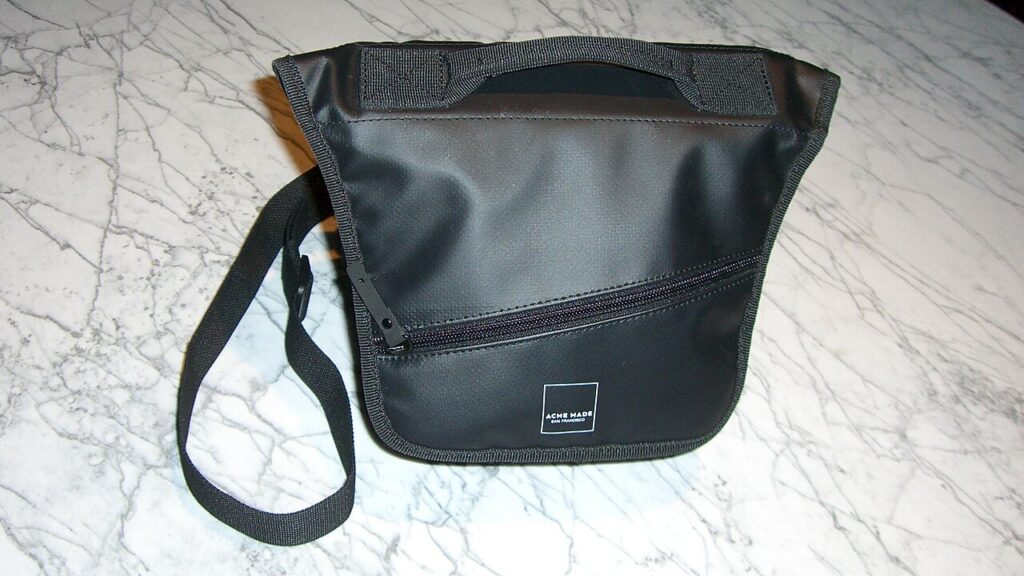

A tech pouch should make the small kit you use easier to reach, not encourage you to carry every spare cable. Before shopping, lay out one realistic day’s accessories and remove duplicates. The shape and organization of that actual kit matter more than a pouch’s maximum advertised capacity. A flatter, simpler design may work better than a heavily divided miniature suitcase.
Build the kit before choosing the container
Group items by task: charging, connecting to a display, listening, or transferring photos. Include the charger and cables you actually use together. Leave occasional accessories in a separate home organizer unless you have a clear reason to carry them every day.
Note the awkward shapes. A thick power adapter, long plug, or rigid card reader can determine the pouch depth even when most cables are thin. Check whether a pouch’s stated dimensions are external or describe usable internal space. Padding and dividers can reduce that space.
Compare flat and box-shaped designs
A flat pouch can slip beside a laptop or notebook without consuming the whole bag. Its limits appear when bulky chargers make it bulge or place pressure on nearby items. Check the closure with a realistic load rather than judging the empty shape.
A deeper organizer can hold more varied objects and may open conveniently on a desk. It also occupies a larger block of your bag. Make sure that block still leaves room for the things the bag was meant to carry. More compartments do not necessarily mean a more efficient everyday setup.
Choose organization that matches access
Elastic loops can keep similar cables separate, while open pockets can suit items you frequently swap. Tight loops may be awkward for a thick connector or a short cable. Check how each compartment opens and whether small adapters can fall out when the pouch is fully unzipped.
Think about the item you reach for first at a train seat or meeting table. It should not require unpacking several unrelated accessories. A small outer pocket can help, provided its closure and placement suit the object. Avoid placing fragile connectors where they will be pressed during normal bag handling.
Read material claims carefully
Water-resistant fabric does not establish a waterproof enclosure. Zippers, seams, and closures matter, and the manufacturer’s stated conditions govern. Do not treat a pouch as a certified protective container for batteries or delicate equipment unless it has appropriate evidence for that role.
Check lining, seams, and cleaning instructions. A light-colored interior can make small items easier to find; a darker one may show less visible staining. Those are preference trade-offs rather than evidence that one material will last longer in every situation.
Test the complete bag arrangement
Place a similarly sized box or existing pouch in your bag before ordering. Check the effect on laptop access, water-bottle space, and the ability to close the bag without forcing it. Revisit the kit after a week and remove items that never leave the pouch.
Sources
Based on the manufacturer and primary-source references below, checked November 12, 2026.
Continue with our smarter shopping field guide and explore more fashion lifestyle guides. Read our editorial policy for sourcing and corrections.