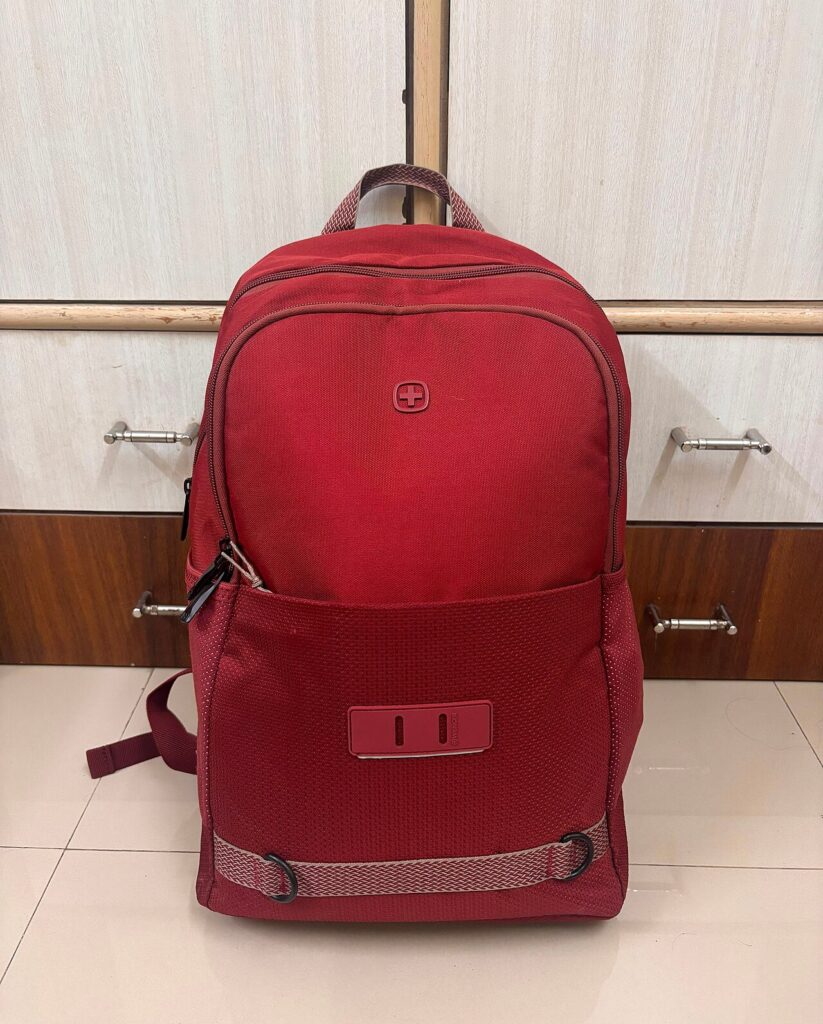

A commuter backpack has to work while you walk, wait, sit, and reach for something in a crowded space. Start with the load you carry most days rather than the largest trip you can imagine. Laptop fit, access, strap adjustment, and how the bag sits when partly full are more useful starting points than counting every advertised pocket.
Measure the laptop and the load
Record the laptop’s outside dimensions with any protective case attached. Compare them with the bag’s usable compartment measurements. Screen diagonal alone does not establish fit. Include the charger, lunch, bottle, and papers in a realistic load list before choosing capacity.
Separate bulky items from small ones. A lunch container can determine the bag’s depth, while a tall bottle can affect pocket access. A bag that technically holds each item separately may still be awkward when they are packed together. Look for practical internal layouts rather than relying only on a volume number.
Check fit with normal clothing
Try the bag with the load and outerwear you normally use. Adjust the straps and notice where the bag sits while walking and sitting. A short fitting with an empty bag can miss pressure points that appear when it carries your actual kit.
Read the manufacturer’s sizing information and return terms. Fit is individual, and an adjustable strap does not guarantee every bag suits every body. If you often carry heavier equipment, seek a design intended for that load rather than assuming a fashion-oriented bag offers the same support.
Prioritize the access you repeat
Identify the items you need without putting the bag on the ground: transit pass, keys, phone, or headphones. Choose a pocket arrangement that makes those actions simple and keeps closures manageable. Consider which hand you use when wearing the bag on one shoulder.
A separate laptop opening can help in some routines, but it introduces another closure and may use internal space. A top-loading compartment can be straightforward, while a broad opening may make packing easier. Neither layout is automatically better; compare the sequence you actually perform during your commute.
Interpret protection claims precisely
Padding is not independent evidence of a particular drop rating. Water-resistant fabric is not a blanket waterproof claim for the whole bag. Check the exact construction and stated conditions, including zippers and seams, and follow the maker’s guidance for protecting electronics.
If you use a rain cover or separate sleeve, include it in the fit check. Avoid buying a backpack around a protection claim that the manufacturer cannot explain. Reliable dimensions and clear care instructions are more useful than an undefined rugged label.
Compare the bag beyond the first day
Look at cleaning, replacement hardware, warranty information, and how the bag stores when empty. Check whether a structured design occupies more space than you want at home or under a desk. An oversized bag can encourage carrying equipment you rarely need.
REI’s pack guidance offers useful background on matching load and body fit, while its travel-bag guidance highlights practical compartment and size questions. Choose around your repeatable weekday load and the access points you will use most.
Sources
Based on the manufacturer and primary-source references below, checked November 12, 2026.
Continue with our smarter shopping field guide and explore more fashion lifestyle guides. Read our editorial policy for sourcing and corrections.