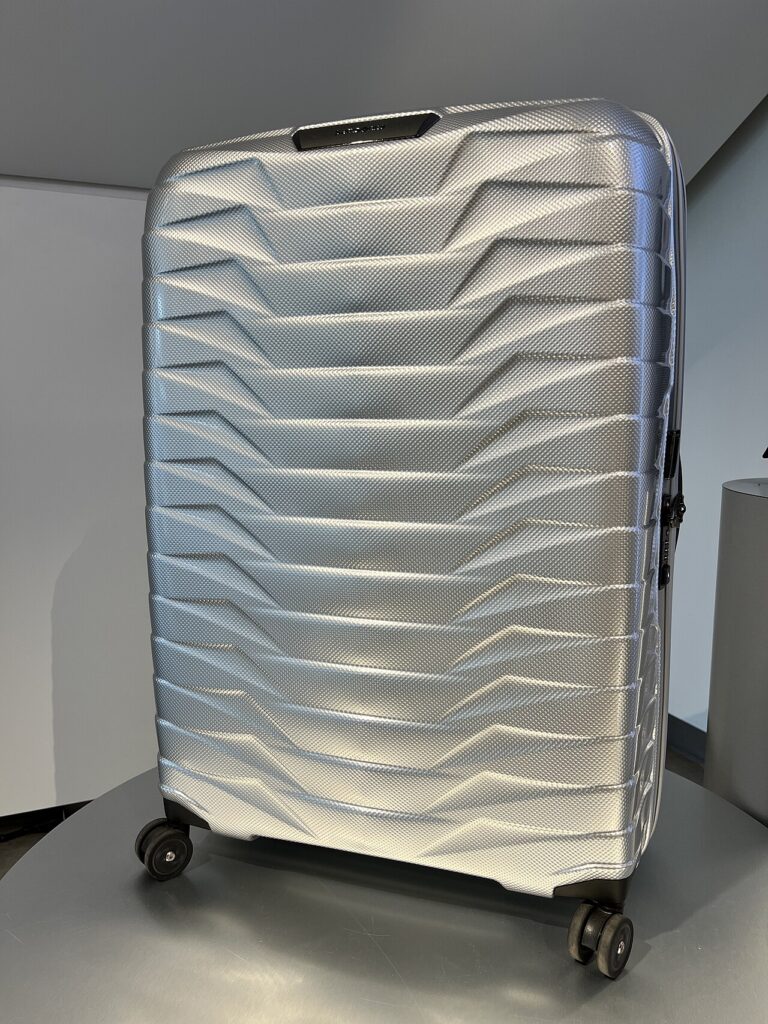

Carry-on luggage should be chosen around the actual airline itinerary and the way you move through a trip. A suitcase marketed as cabin-size is not a universal permission to take it aboard. Start with your carrier’s current size, weight, and allowance rules, then compare the bag’s complete exterior dimensions, including the parts that protrude beyond its main shell.
Measure the whole bag
Check whether the published dimensions include wheels, handles, and other projections. Confirm the measurement of the exact size and version you plan to buy. Product families often contain several similar-looking cases, so a favorable comment about one size may not apply to another.
Look at the current rules for every relevant flight, including connections and fare-specific allowances. A bag that suits one itinerary may need checking on another.
Compare the journey outside the airport
Think about stairs, sidewalks, public transit, and the walk to your accommodation. A rolling case can be convenient on smooth floors but still needs lifting. A travel backpack keeps hands available but puts the load on your body. Choose for the complete route rather than the terminal alone.
Try the loaded handling where possible. Check handles, wheel clearance, strap adjustments, and the empty weight you must carry before adding belongings. REI’s travel-bag guidance emphasizes matching the bag to packing habits and trip type; translate that into your own route and load.
Match the opening to your packing space
A clamshell case offers broad access but needs room to open. A top-opening or duffel-style bag may be easier in a tight hotel room. Consider whether you want to reach a jacket or documents without exposing the whole contents.
Check how compression straps, dividers, and pockets affect usable space. A highly organized interior may suit a consistent packing routine but be less flexible for a bulky item. Measure essential objects before assuming a larger volume figure guarantees an easier fit.
Read durability and care evidence
Shell appearance does not establish impact resistance, and soft fabric does not automatically mean poor durability. Look for exact-material descriptions, service options, wheel or handle replacement information, and clear warranty terms. Avoid transferring a claim from a different case in the same collection.
Check zippers, closures, and how the case behaves when you need to lift it. If a bag has a built-in battery or powered feature, read the airline and manufacturer rules for that feature specifically. Do not treat ordinary luggage acceptance as approval for every installed electronic component.
Keep the purchase reversible
Compare return conditions before packing for a real trip. Keep the packaging until the measurements and handling have been checked. A practice pack can reveal whether the bag suits your normal clothing, shoes, and electronics without forcing every closure.
A strong buying decision combines current carrier rules, full dimensions, manageable loaded weight, and an opening style that works in the places you will actually stay.
Sources
Based on the manufacturer and primary-source references below, checked November 12, 2026.
Continue with our smarter shopping field guide and explore more fashion lifestyle guides. Read our editorial policy for sourcing and corrections.