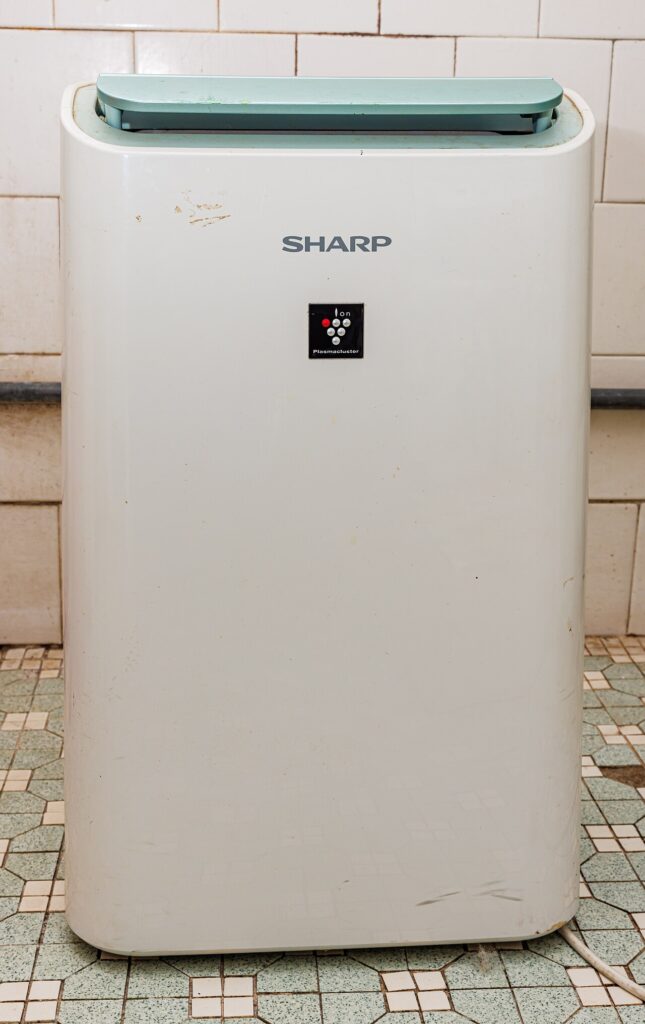

A dehumidifier purchase starts with the space and moisture conditions, not the size of its water bucket. The amount a unit can remove under specified conditions and the way collected water leaves the machine are different questions. Record the room, normal temperature, observed conditions, and possible drainage route before comparing capacity labels.
Separate capacity from the collection bucket
Dehumidifier removal capacity is commonly expressed in pints per day under stated test conditions. The bucket tells you about collection between emptying sessions, not the machine’s whole removal capability. ENERGY STAR’s buying guidance relates selection to both room size and dampness rather than floor area alone.
Compare ratings made under compatible conditions. Older and newer ratings may not be directly interchangeable. If replacing an existing unit, keep its model and documentation rather than assuming the same number in a new product title means the same test basis.
Plan how water will be removed
A removable bucket requires access and a routine for emptying. Check the filled-bucket handling, handle design, and how the manufacturer describes automatic shutoff. Place the unit so the bucket can be removed without moving heavy furniture or stretching the power lead.
For continuous drainage, read the hose, outlet-height, and routing requirements. A gravity drain and a pumped arrangement have different needs. Verify what is included and whether the intended drain route suits the instructions. Do not assume a hose connection means water can travel uphill.
Match the operating environment
Check the permitted operating temperatures and any relevant automatic defrost behavior. A unit chosen for a warm living area may not suit a cooler basement. Read the actual model’s environmental limits rather than transferring a feature from a neighboring product.
Identify suitable electrical placement and clearance according to the manufacturer. This guide does not prescribe wiring, drainage construction, or a remedy for structural water entry. A machine should not be treated as evidence that the underlying cause of persistent moisture has been resolved.
Consider the daily interaction
Think about controls, target settings, filter access, and how often someone will check the appliance. A clearly readable humidistat and simple controls can be more useful than remote features that nobody in the household wants to configure.
Noise and warm exhaust can affect where the unit is practical. Seek exact-model evidence and return terms if those considerations matter. Wheels may help on one surface and add little on another; measure the path, door clearance, and storage position instead of judging portability from a handle alone.
Compare the complete arrangement
List the unit, any required hose or pump, maintenance access, and the place collected water will go. Include current energy and supply costs using documented figures if making a budget. Avoid universal savings or room-capacity promises based on a generic product label.
Use ENERGY STAR’s current guidance and the manufacturer’s exact specifications to form a shortlist. The strongest purchase decision answers both how moisture is removed and how the appliance will be managed every day.
Sources
Based on the manufacturer and primary-source references below, checked November 12, 2026.
Continue with our smarter shopping field guide and explore more home kitchen guides. Read our editorial policy for sourcing and corrections.