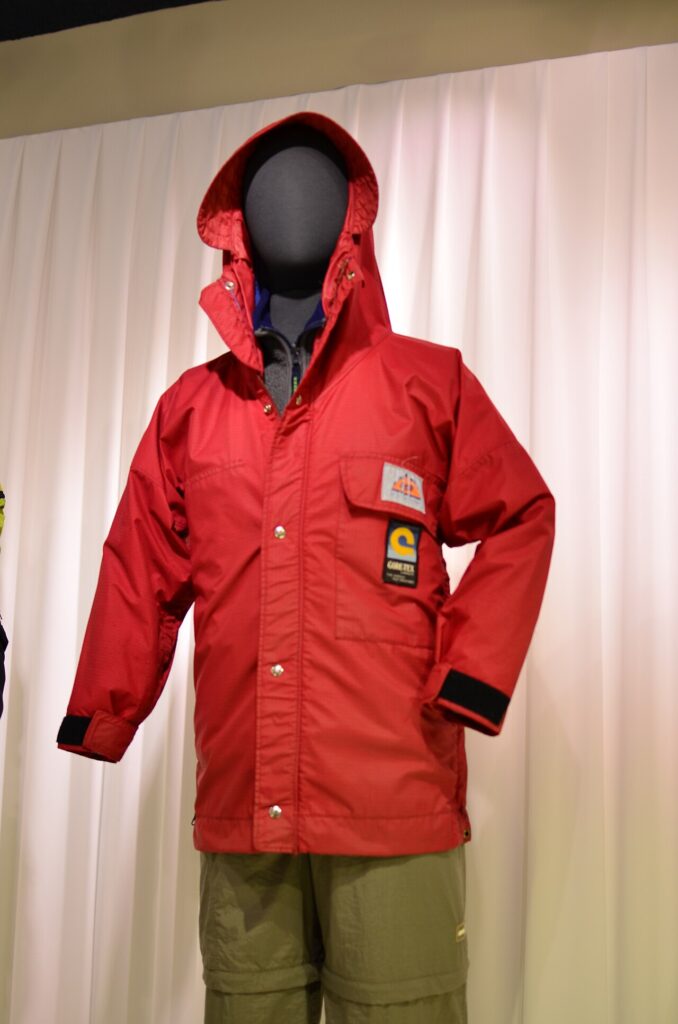

A rain jacket should suit the weather exposure, activity, and layers you expect to wear beneath it. A brief walk between buildings and a long, active outing call for different compromises. Start with that situation before comparing fabric names. Protection, ventilation, fit, and care need to work together, and no single marketing number answers all four questions.
Distinguish water resistance from the intended protection
Read how the manufacturer describes the jacket’s use and construction. Water-resistant and waterproof claims are not interchangeable. Seams, closures, hood design, and fabric all contribute to the actual garment. Do not infer a whole-jacket performance guarantee from the name of one material.
REI’s rainwear guidance explains the broad categories and their trade-offs. Use that background to ask better questions about the exact jacket rather than assuming every item within a category performs identically. This guide does not independently verify waterproof testing or compare laboratory ratings.
Match ventilation to the activity
A jacket that keeps rain out can still feel uncomfortable during exertion. Check the intended breathability and the mechanical ventilation options, such as supported vent openings. Fabric specifications and useful physical openings answer related but separate questions.
Try operating the vents while wearing the jacket and a pack, if relevant. A vent hidden beneath a strap may be less convenient than it appears on a product page. Consider how you will adjust layers and openings during the activity rather than expecting a membrane to eliminate all moisture inside.
Fit it with the layers you use
Try the jacket over a realistic combination of clothing. Reach forward, lift your arms, and sit or bend as appropriate. Check sleeve coverage and whether the hem moves in ways that interfere with the intended use. A comfortable fit standing still is only a starting point.
Inspect hood adjustment and visibility with your usual headwear. If a helmet is involved, confirm the exact compatibility and intended activity. Do not assume a large hood is automatically suitable or that a compact one offers enough room for every layer.
Examine pockets and closures
Place your hands and a few ordinary items in the pockets to understand access and bulk. Check whether a backpack belt or strap blocks the opening. Decide whether protected storage is needed separately for electronics rather than treating every jacket pocket as waterproof.
Look at zipper operation, cuff adjustment, and the way the jacket packs away. A lighter garment can be convenient to carry, while a more substantial construction may suit another routine. Avoid assuming weight alone proves either durability or protection.
Read the care process before deciding
Rainwear can require specific washing, drying, and treatment instructions. Choose a garment whose care you can follow, and keep those instructions with the purchase record. A complex maintenance routine is part of the ownership decision, not something to discover after performance changes.
Choose a documented design for a defined use, try it with real layers, and verify the return policy. The strongest purchase is one you can move in, adjust, and care for as instructed.
Sources
Based on the manufacturer and primary-source references below, checked November 12, 2026.
Continue with our smarter shopping field guide and explore more fitness outdoors guides. Read our editorial policy for sourcing and corrections.