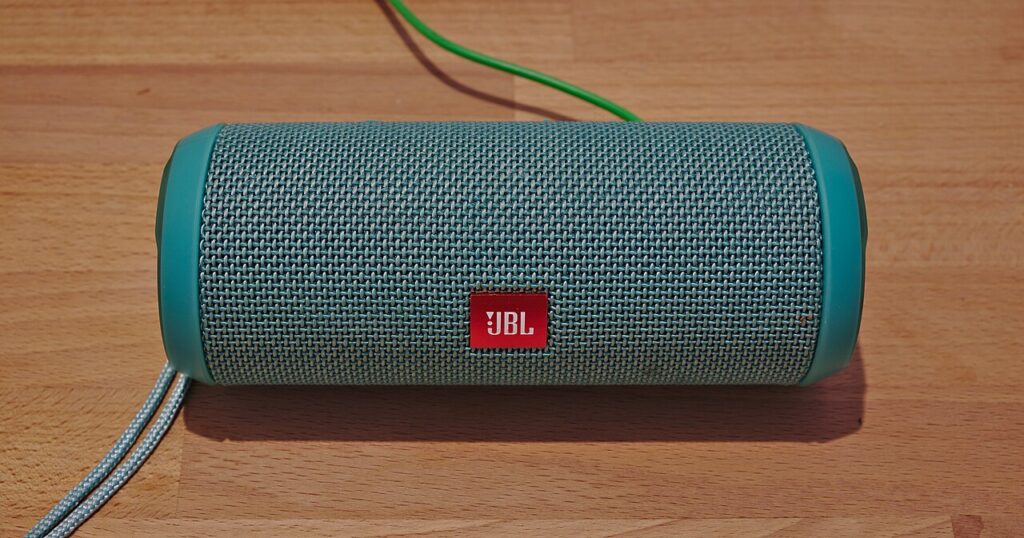

A small apartment rewards a speaker that is easy to place and pleasant to operate at the levels you normally use. Maximum loudness is only one consideration, and often not the first. Think about whether the speaker will live on a desk, move between rooms, or serve a kitchen where physical controls matter more than a long list of app features.
Products to consider
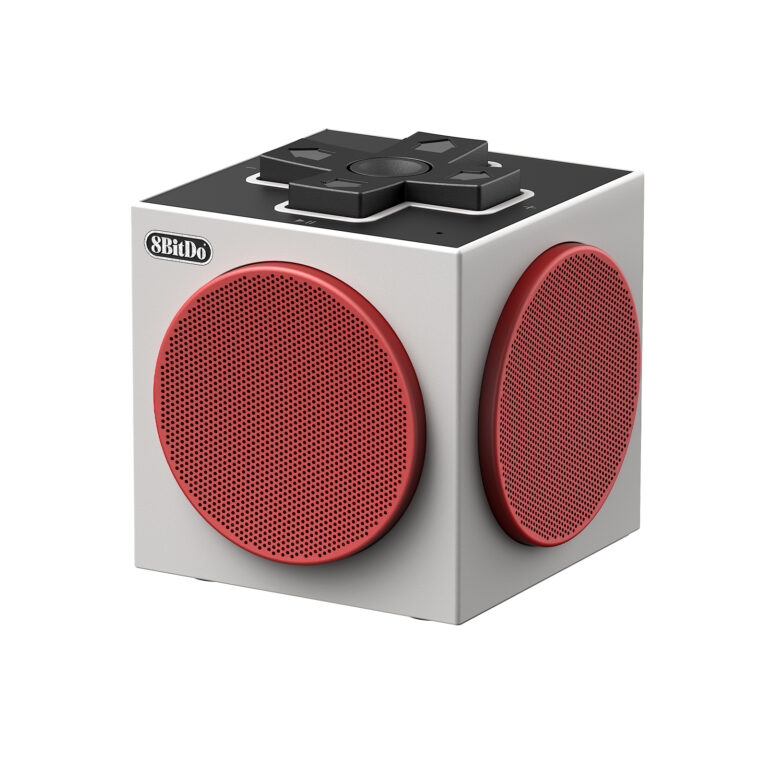
8BitDo Retro Cube 2 Speaker — N Edition
A small desktop speaker with Bluetooth, 2.4GHz, and wired USB connections, plus a charging dock. Compare it for a retro-styled desk where the controls and multiple connection choices will be useful.
Check on Amazon Paid link. I may earn a commission from qualifying purchases.Choose the listening position before the size
Mark the shelf or counter area the speaker can occupy without crowding other objects. Include space for the charging cable and controls. A compact cylinder may fit one location better than a wide rectangle, even when their advertised sound descriptions are similar.
Decide whether you mostly listen nearby or want sound across an open room. Manufacturer descriptions can help identify intended uses, but they do not replace evidence about the exact model. Seek independent listening observations that explain the room, distance, and settings rather than relying on a universal best-sounding label.
Check how you will connect
Confirm the source devices and the supported input methods. Bluetooth convenience does not imply a speaker also has a wired input, a microphone for calls, or Wi-Fi streaming. Check each feature separately. If you plan to use a television, read both devices’ connection and synchronization guidance.
Device switching deserves attention in a shared home. Ask whether pairing must be repeated and whether the speaker can remember or connect to the devices you use. A household-friendly setup should make it easy to choose the source without requiring everyone to install another app.
Treat stereo pairing as model-specific
Two speakers from the same brand are not automatically compatible. Manufacturer documentation sometimes limits pairing to particular models or generations. Ultimate Ears’ published pairing exclusions illustrate why the exact compatibility list matters. Verify it before buying a second unit with the expectation of stereo playback.
For a desk, compare the convenience of one portable unit with a dedicated left-and-right arrangement. A portable speaker is easier to move. A fixed stereo pair needs more space and connections. Choose for your listening routine rather than assuming one design wins for every apartment.
Look at everyday controls and power
Try to understand volume adjustment, play/pause behavior, startup sounds, and the ability to operate without a phone screen. Check whether controls are easy to distinguish by touch. For shared rooms, small usability details can matter more than an additional sound mode.
Battery estimates depend on settings and conditions. Read the basis of the manufacturer’s figure and decide whether the speaker will actually spend much time away from its charger. If it stays plugged in, follow the manufacturer’s guidance for that use and keep the charging connection accessible.
Buy for the room you have
Water resistance, outdoor modes, and rugged construction may be useful if the speaker also travels. They are not automatic reasons to choose it for a quiet desk. Do not infer protection from an appearance or carry handle; read the exact rating and permitted conditions.
Shortlist models with clear dimensions, compatible inputs, simple controls, and suitable return terms. No verified Amazon speaker recommendation or measured sound result is implied by the examples of documentation.
Sources
Based on the manufacturer and primary-source references below, checked November 12, 2026.
Continue with our smarter shopping field guide and explore more tech guides. Read our editorial policy for sourcing and corrections.